Why New Year’s Resolutions Fail: A Polyvagal Perspective on Burnout
The New Year often arrives with a rush of motivation. Fresh calendars. Big goals. Promises to ourselves that this will be the year we finally get it all together. We set intentions that look inspiring on paper, but require us to function like machines. More productivity. Better habits. Less rest. Less room for being human.
For many people, January isn’t energizing, it’s exhausting. The pressure to “start strong” can lead us to pile too much onto our plates too quickly. We sprint before we’ve stretched. And before we know it, the year that was supposed to feel different starts to feel heavy, overwhelming, and unsustainable.
Burnout doesn’t come from a lack of motivation. It comes from asking our nervous systems to perform at a pace they were never designed to maintain.
What if this year wasn’t about doing more, but about listening better?
You Are a Body First: A Polyvagal Perspective
Polyvagal theory, developed by Dr. Stephen Porges, helps us understand why willpower alone doesn’t prevent burnout. At its core, polyvagal theory reminds us of a simple truth: you are a body first, not a machine.
Your nervous system is constantly scanning for safety or threat, often outside of conscious awareness. When it perceives pressure, overload, or chronic stress, it shifts your body into survival states long before your mind catches up. You might still be telling yourself, “I’m fine, just push through,” while your body is already signaling the need to slow down.
Polyvagal theory describes different nervous system states. When we feel safe and regulated, we’re in a connected, grounded state where we can rest, relate, and think clearly. But under stress, many people shift into what I often call “go mode”,the sympathetic, high-alert state associated with anxiety, urgency, and overfunctioning. And what happens when you stay in “go mode” for too long? Your body will eventually answer for you. When the nervous system remains in a prolonged state of high activation, it often shifts into freeze or collapse, which many people experience as burnout. At that point, your body is no longer offering gentle cues to slow down; it’s making the decision for you. Burnout isn’t a personal failure, it’s a biological response to sustained overwhelm.
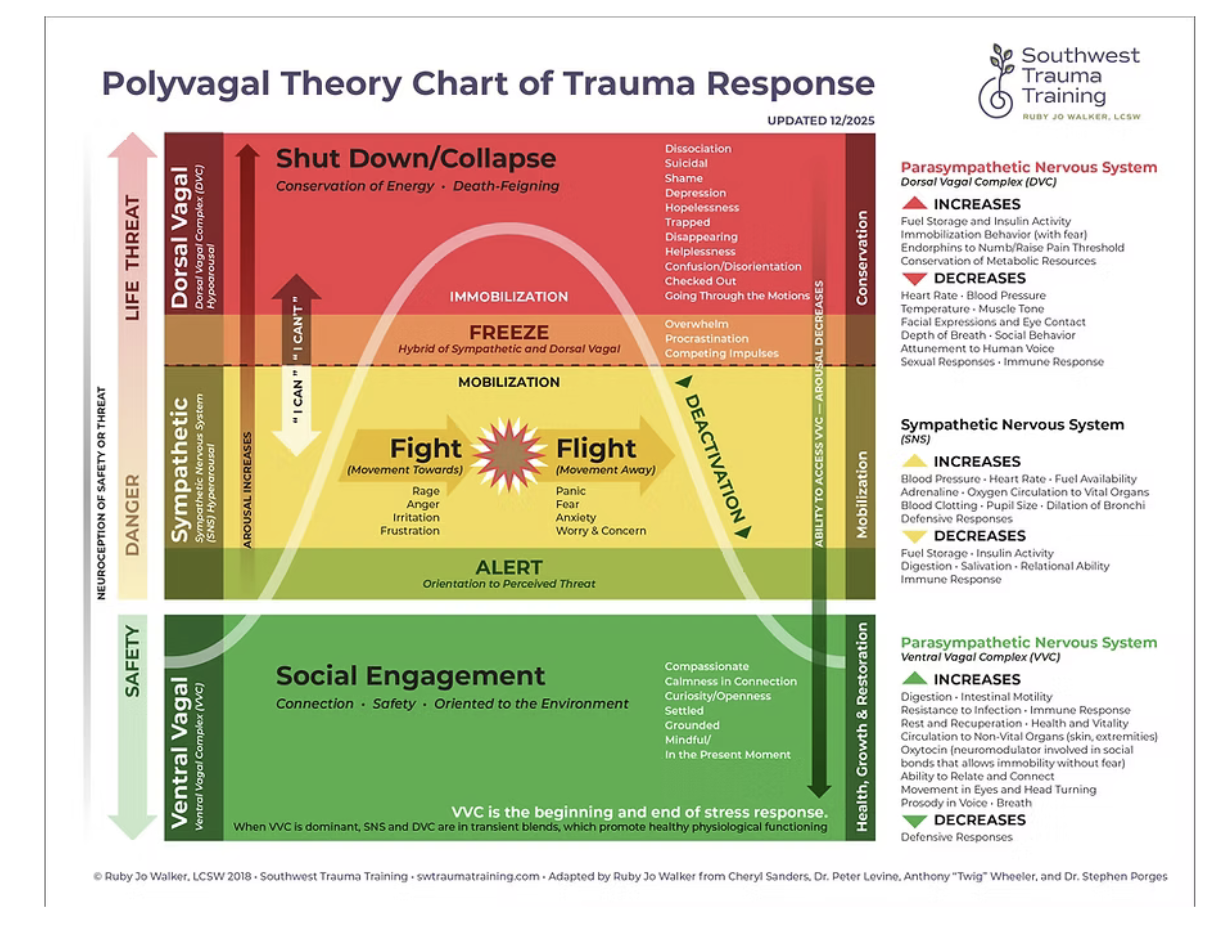
Burnout Warning Signs: When “Go Mode” Takes Over
Burnout rarely appears overnight. It builds gradually as we stay in go mode for too long without adequate recovery. Some common warning signs include:
Constant urgency or racing thoughts
Difficulty relaxing, even during downtime
Increased irritability or emotional numbness
Trouble sleeping or waking already exhausted
Feeling disconnected from joy, creativity, or relationships
Needing caffeine, adrenaline, or pressure just to function
When we ignore these signals, the body often escalates them, fatigue becomes exhaustion, stress becomes shutdown, and motivation disappears altogether.
So when you reach the end of January and notice that your New Year’s resolutions aren’t sticking, it’s important to pause before turning inward with criticism. If you’re feeling overwhelmed, fatigued, exhausted, or even hopeless, that doesn’t mean you’ve failed or that you’re not enough. Instead of asking, “What’s wrong with me?” try asking a different question: Is the rate I am moving at actually sustainable?
From a polyvagal perspective, fatigue and overwhelm aren’t character flaws, they’re data. They are information from your nervous system about the pace and pressure you’re under. When intentions require you to stay in go mode without adequate rest, your body will eventually signal that something needs to change. Those signals might show up as exhaustion, loss of motivation, brain fog, or emotional shutdown.
This is often where people double down, trying harder, pushing through, or adding more structure, when what the body is really asking for is less. Less urgency. Less load. Less self-judgment.
Setting intentions that support your nervous system means allowing rest to be part of the plan, not a reward for finishing everything on your list. Movement and effort matter, but so does recovery. Regulation comes from rhythm, not relentless forward motion.
As you revisit your goals, consider what might need to be softened, slowed, or removed entirely. Sustainable change doesn’t come from forcing yourself to function at an inhuman pace. It comes from listening early, responding with care, and trusting that steady, realistic steps will take you further than burnout ever could.
Resources
Burnout: The Secret to Unlocking The Stress Cycle by Emily Nagoski PhD and Amelia Nagoski, DMA
18 Polyvagal Theory and How to Use the Exercises in Therapy
Transforming Trauma: The Polyvagal Theory and Developmental Trauma w Dr. Stephen Porges
References
Sutton, Jeremy, Ph.D. “18 Polyvagal Theory & How to Use the Exercises in Therapy.” PositivePsychology.com, reviewed by Maike Neuhaus, Ph.D., 17 Oct. 2023, positivepsychology.com/polyvagal-theory/.
“Polyvagal Theory.” Mindfully Well Counselling Cork, corkpsychotherapyandtraumacentre.ie/trauma/polyvagal-theory/.
All material provided on this website is for informational purposes only. Direct consultation of a qualified provider should be sought for any specific questions or problems. Use of this website in no way constitutes professional service or advice.